_edited_edited.png)
Group III Price Increases Are Not a Blip. They Are the Bill Coming Due.
- PETRO DAWG

- Apr 17
- 6 min read
For a while, the petro-lubricant market had been pretending it could have it both ways: premium base stocks, lean inventories, globalized sourcing, and just enough spare capacity somewhere else to save the day when one region hiccupped. That illusion is over.
Group III prices are rising because the market has been reminded of one ugly truth: when too much of the world depends on a narrow band of premium supply, “tight” can turn into “good luck” with shocking speed. And that is exactly what happened when major Mideast Gulf facilities were disrupted this spring. The result was not just higher prices. It was panic buying, allocation, disappearing spot offers, and the kind of supply anxiety that turns ordinary procurement into a blood sport.
Let’s say the quiet part out loud. Group III is not just another interchangeable barrel. It sits at the premium end of the base oil stack and matters enormously for modern high-performance lubricant formulations. So when the market loses confidence in Group III availability, customers do not shrug and move on. They scramble. Sellers harden. Freight gets weird. Alternatives get thin. Prices go vertical.
And no, this is not just a “Dubai issue.” That shorthand is sloppy. The real story is a regional shock centered on the Mideast Gulf. Argus estimates that the region accounts for about 20% of global Group III output. In 2025, it supplied 47% of U.S. Group III imports and 72% of European imports. That means when this region gets jammed up, the shock does not stay local. It walks straight into blenders’ cost structures from North America to Europe.
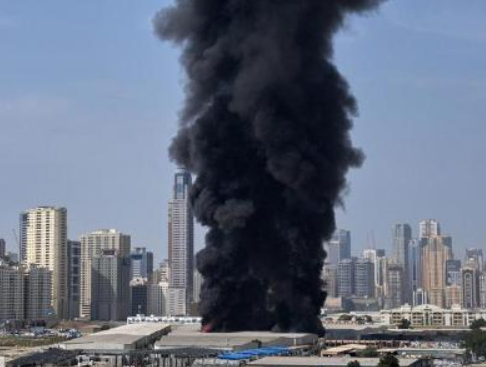
The UAE piece of this story is Ruwais, ADNOC’s major refining complex in Abu Dhabi. On March 10, Reuters reported that ADNOC shut the Ruwais refinery after a drone strike caused a fire at the site, with industry monitoring indicating that Refinery 2 was shut and Refinery 1 had already reduced operations by roughly 10% to 20% days earlier. That matters because when a site of that scale stumbles, the market does not ask whether it is “temporary.” It asks how much supply just became unreliable.
Bahrain added more fuel to the fire, figuratively and literally. Reuters reported on March 9 that Bapco declared force majeure on group operations after an attack on its refinery complex at Sitra. If you are a blender or distributor depending on premium barrels moving through normal channels, “force majeure” is corporate for: stop making assumptions.
Then came Qatar. On March 19, Reuters reported that Shell’s Pearl GTL facility stopped production after attacks damaged the site. Argus later reported that one of Pearl’s two trains sustained damage that could take about a year to repair. That is not a nuisance. That is a structural problem. Pearl is one of the crown jewels in premium base stock supply, and when a facility like that goes down, the market does not simply plug the hole with optimism and LinkedIn posts.
This is why the often-repeated “20%” statistic needs to be handled carefully. The cleaner and more accurate framing is not that one plant in Dubai produces 20% of the world’s Group III. It is that the broader Mideast Gulf supply system is responsible for roughly a fifth of global Group III output, and this year that system took simultaneous hits across the UAE, Bahrain, and Qatar. The issue is concentration risk, not one magic plant.
The price response has been brutal. Argus reported on April 6 that Asia-Pacific Group III prices had risen for the fifth straight week to the highest level in more than seven years. In the week ending April 3, Argus-assessed Asia Group III 4 cSt and 6 cSt FOB export prices jumped $250 per metric ton to $1,750/t, while 8 cSt rose $200/t to $1,600/t. That is not “firmness.” That is the market sending a bill with extra attitude.
The pain did not stop in Asia. Argus reported on April 11 that Group III spot prices in the U.S. had more than doubled since the war began in late February, while European prices were up about 70%. As of April 10, Argus assessed U.S. Group III 4 cSt spot prices at $2,406.50/t and European prices at $2,515/t. Those are not ordinary moves. Those are “someone just rewrote your procurement math” moves.
The second punch is logistics. Even where supply exists on paper, moving it is another matter. Argus reported that Group III supplies remained stranded in the Mideast Gulf while the Strait of Hormuz was effectively closed, and market participants floated costly workarounds such as trucking product to Jeddah or Oman before reloading for export. In theory, there is always a workaround. In practice, many workarounds are just expensive ways of spelling “shortage.”
The broader supply chain was already leaning too hard on the region before the disruptions. Base Oil News reported that the U.S., Europe, and Asia imported more than 2.55 million tonnes of Group III base oils from Qatar, Bahrain, and the UAE in 2025. The same report said the Middle East accounted for more than 40% of U.S. Group III supply and more than 35% of Europe’s Group III supply for a third straight year. Translation: the world had already made itself comfortable with dependence. Then dependence got expensive.
That dependence is why this current price wave is not just a crude story. Yes, crude matters. Yes, freight matters. Yes, additives matter. But Group III is now dealing with a more specific problem: premium barrels are harder to replace quickly because many alternative supplies are already committed to term contracts, other facilities have their own maintenance schedules, and refineries under feedstock stress are prioritizing transport fuels over base oils. Argus reported exactly that dynamic in Asia, where refineries have cut base oil output to prioritize diesel and gasoline.
Finished lubricants are already reflecting the chaos. JobbersWorld reported that from early March to early April 2026, the market saw 22 separate lubricant price increase announcements from at least 17 manufacturers, spanning majors and independents alike. In other words, what started as upstream disruption did what upstream disruption always does when people stop pretending: it marched downstream with a price sheet in its hand.
The seriousness of the situation is obvious from the industry response. On March 13, ILMA said it had asked API to invoke force majeure flexibility under API 1509 and urged the U.S. Department of Energy to treat the issue as a critical supply-chain problem. ILMA said members were reporting that spot availability had largely disappeared, remaining supply was on allocation, and prices were rising sharply. Trade groups do not usually hit the panic button for sport.
So where does this go next?
First, the idea that Group III prices will simply “settle down” because the initial headlines cooled off is lazy thinking. Argus reported that even after the ceasefire, prices remained elevated and supplies constrained. Pearl’s repair timeline alone is enough to keep the market nervous, and that is before layering in freight dislocation, allocation behavior, refinery run cuts, and the usual seasonal demand complications.
Second, buyers should stop treating Group III as if it lives in an infinite, frictionless market. It does not. When the premium pool tightens, the cost of being under-contracted gets ugly fast. The companies that fare best in this kind of cycle are usually the least romantic about sourcing. They buy with redundancy, maintain supplier relationships before the panic, and understand that “cheapest” and “secure” are often two different line items masquerading as one. That last lesson tends to arrive right after the surcharge.
Third, this episode should force a more honest conversation about domestic and regional supply resilience. Heavy import reliance works beautifully until it does not. And when it does not, everyone rediscovers the same old rule: supply security always seemed expensive right up until insecurity became unaffordable. North America’s dependence on imported Group III has become impossible to ignore, especially with the Middle East and Asia still dominating trade flows.
The bottom line is simple. Group III price increases are not random noise, and they are not merely the result of opportunistic sellers getting frisky. They are the rational consequence of concentrated supply, physical disruptions at key Gulf facilities, export bottlenecks, and a market suddenly realizing it had less cushion than it thought.
So yes, prices are up. But the deeper story is not the increase itself. The deeper story is what the increase exposed.
It exposed how much premium lubricant performance still depends on a handful of critical assets. It exposed how vulnerable global Group III trade is to regional shocks.And it exposed, once again, that in petro-lubricants, the invoice always arrives after the complacency.
This time, it arrived with interest.
-PETRO DAWG


Comments